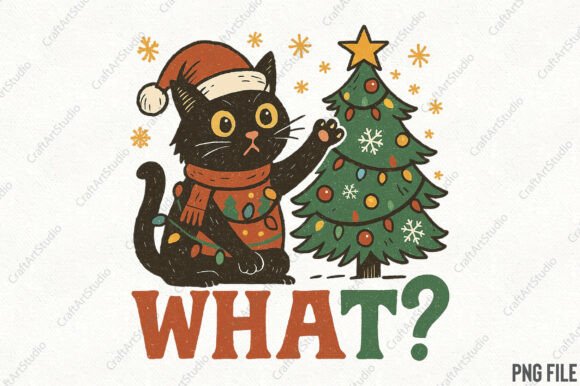
Reviewing the Christmas Cat What PNG Sublimation for Stitching
As a designer who spends half my life digitizing and the other half stitching, I have learned to look past the glossy preview images. We all know that what looks crisp on a screen does not always translate cleanly to fabric. When I first pulled up the Christmas Cat What PNG Sublimation file, my initial reaction was one of cautious optimism. It sits squarely in the realm of Illustrations, offering a whimsical, holiday-themed aesthetic that is currently dominating social media feeds. But the real question for us embroidery professionals is not just whether it is cute, but whether it is viable for commercial production.
First Impressions and Visual Personality
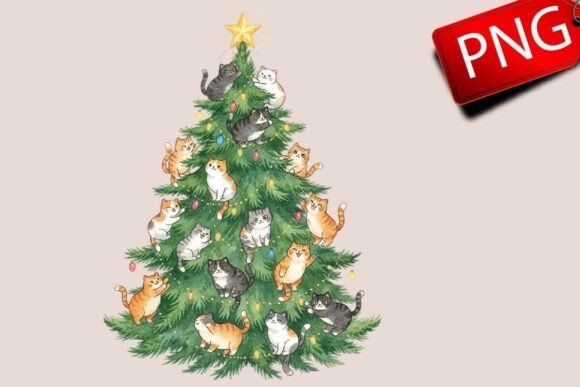
The design carries a playful, slightly chaotic energy that fits perfectly with modern holiday decor trends. The layout is balanced, avoiding the common pitfall of having too much visual weight on one side. For an embroidery project, this balance is crucial. If you are working with a standard hoop size, you want a design that anchors well without looking lopsided after the stabilizer is trimmed. The mood is festive but not overly traditional, making it appealing to a younger demographic or those looking for quirky, personalized gifts.
However, because this is originally a sublimation asset, we must approach it with a digitizer’s eye. Sublimation files are often high-resolution raster images meant for heat transfer, not vector paths meant for needle penetration. Using this as a reference for creating a machine embroidery design requires careful interpretation of the shapes. The details need to be simplified. Tiny whiskers or intricate fur textures that look great in print can become a nightmare of thread breaks and bird nests if attempted with satin stitch or dense fill stitch in embroidery.
Real-World Application: The Holiday Tote Bag Test
To truly evaluate the potential of this design, I imagined a specific real-life scenario: a custom order for a boutique client wanting fifty holiday tote bags for a seasonal gift shop. This is a common request for Etsy sellers and small shop owners. The Christmas Cat What PNG Sublimation would serve as the perfect visual mockup to show the client before digitizing.
In this context, the design shines on a canvas tote bag. The natural texture of the canvas provides enough grip for the stitches, and the neutral background allows the thread colors to pop. If I were digitizing this based on the illustration, I would opt for a combination of fill stitch for the cat’s body to keep the stitch count manageable and satin stitch for any bold outlines or text elements. The result would be a durable, washable embroidered patch effect that feels premium rather than cheap.
For sweatshirt embroidery, the same logic applies but with added caution. Stretchy fabrics require a different approach to stitch density. If the design is too dense, it will pucker the fabric, ruining the handmade product’s presentation. By using the PNG as a guide, I can plan where to use running stitch for lighter areas, ensuring the garment remains comfortable and retains its shape.
Navigating Fabric and Hoop Constraints
Not every surface is forgiving. While the design is charming, there are specific scenarios where you should proceed with care. If you are attempting this on a cap, the curved surface distorts the image. A wide, horizontal design might wrap awkwardly around the front panel. In such cases, you may need to crop or simplify the Christmas Cat What PNG Sublimation to fit the available hoop size without losing the core character of the cat.
Dark fabrics present another challenge. Since sublimation files rely on color vibrancy, translating this to thread requires high contrast. If you are stitching on black fleece, you cannot rely on subtle shading. You must choose bright, contrasting thread colors to ensure the design is recognizable from a distance. This is where checking your design in a black-and-white mockup is essential. If the silhouette disappears in grayscale, it will likely get lost on dark fabric too.
Thin fabrics, such as silk or lightweight cotton for baby embroidery, demand low stitch density. A heavy fill stitch can tear delicate materials. For these items, consider converting parts of the design into an applique design. This reduces the number of stitches significantly and adds a tactile, layered dimension that customers love in personalized gifts.
Commercial Viability and Brand Consistency
For craft business owners, consistency is key. Using a cohesive set of design assets helps build brand recognition. If your shop specializes in quirky holiday items, this illustration fits seamlessly into that narrative. It enhances the perceived value of the finished product because it feels current and trendy. Buyers engage more with designs that feel fresh rather than recycled clip-art from a decade ago.
However, professionalism dictates that we do not simply print the PNG and call it embroidery. The transition from digital file to physical stitch must be flawless. Poorly digitized versions of complex illustrations can look messy and unprofessional, damaging customer trust. Always test the design on scrap fabric first. Check for thread breaks, jumps, and registration issues. Ensure that the stabilizer you are using matches the fabric weight. A tea towel needs a different stabilizer approach than a thick denim jacket.
Practical Notes for the Embroidery Designer
Before you commit to a large production run or list this as a new item in your Etsy shop, take these practical steps:
- Verify Licensing: Ensure that the license for the Christmas Cat What PNG Sublimation allows for commercial use of derivative works. Just because you can buy the file does not always mean you can sell the stitched outcome. Check the terms carefully.
- Digitize with Intent: Do not auto-digitize. Manually assign stitch types. Use satin stitch for edges and fill stitch for larger areas, but keep the density low to prevent puckering.
- Test Thread Colors: Sublimation colors are infinite; thread colors are limited. Choose a palette that captures the spirit of the illustration without requiring twenty different spools.
- Check Hoop Compatibility: Confirm that the final stitched size fits within your standard hoop sizes. If it is too large, you may need to split the design or reduce it, which could compromise detail.
- Mockup Realistically: Use printable mockups to visualize the design on various products. This helps in marketing your digital embroidery file or finished product effectively.
In conclusion, the Christmas Cat What PNG Sublimation is a strong starting point for holiday-themed projects. It offers a modern, engaging aesthetic that resonates with today’s buyers. However, its success depends entirely on how well you translate that visual appeal into tangible stitches. By respecting the limitations of fabric and thread, and by applying rigorous testing standards, you can turn this illustration into a best-selling item for your craft business. Whether it ends up on a cozy pillow cover, a sturdy apron, or a festive baby onesie, the key is maintaining the charm of the original art while ensuring the durability required of a high-quality handmade product.